Estimated Reading Time: 6 minutes
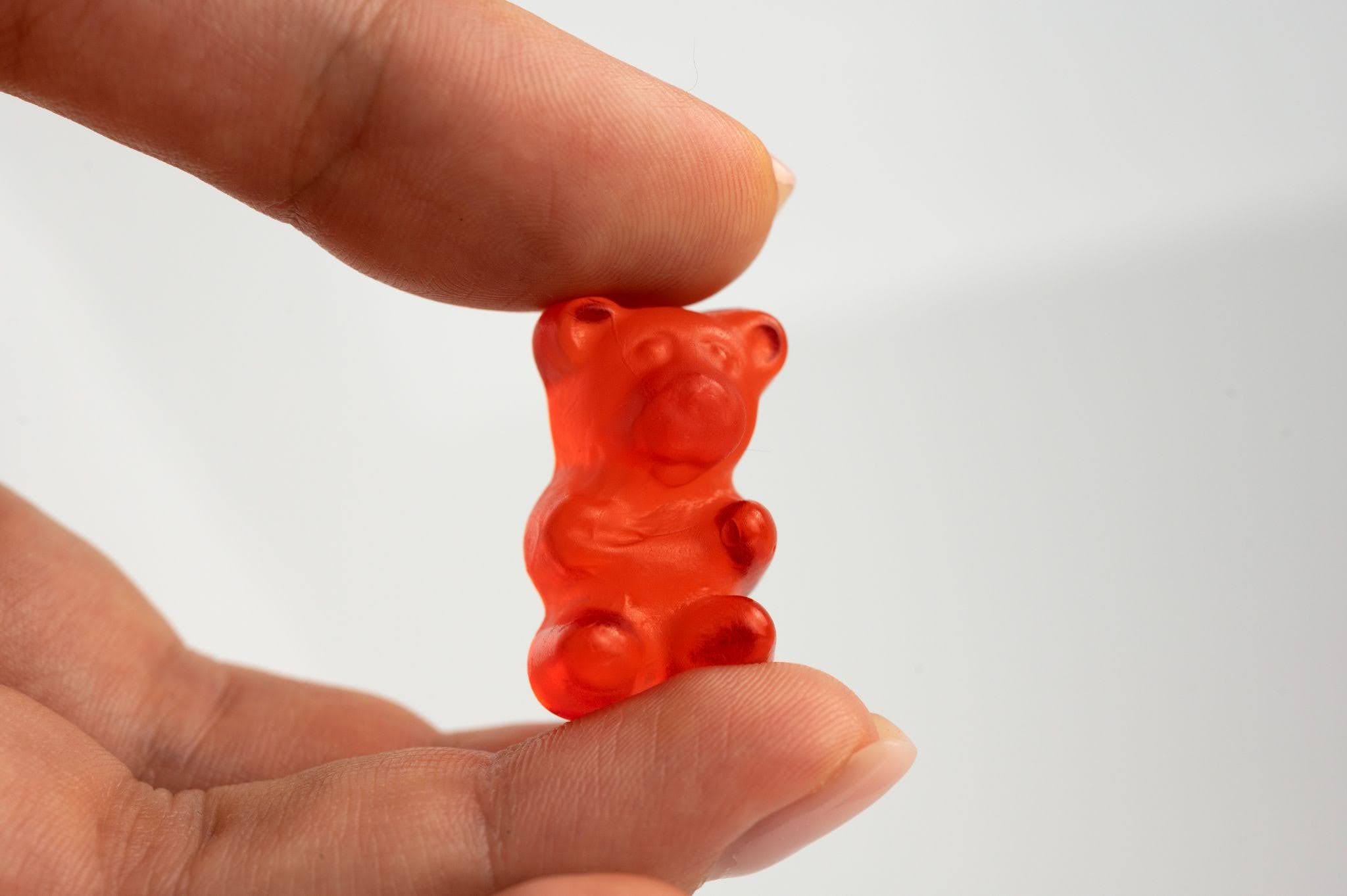
Gummy bears are made from a heated mixture of sugar, glucose syrup and gelatine, poured into bear-shaped moulds and left to set. The basic idea has stayed the same since 1922, even though the ingredients and machinery have changed a fair bit. You'll find the finished product in all sorts of shapes and flavours across our jelly sweets collection.
What Are Gummy Bears Actually Made Of?
The ingredients are surprisingly simple. A traditional gummy bear contains sugar, glucose syrup, starch, gelatine, flavourings, food colourings and citric acid.
That's it. Seriously.
Gelatine is the ingredient that matters most. It's a protein that comes from animal collagen (typically from pork or beef) and it gives gummy bears their bounce and chew. Dissolve it into the sugar mixture and let it cool: it forms a gel that's firm enough to hold its shape but soft enough to sink your teeth into.
Sugar and glucose syrup handle the sweetness, obviously. But they also affect texture. The ratio between the two determines whether you get a softer, squishier bear or a firmer one.
Citric acid adds a subtle tang that balances things out, and fruit-based flavourings give each colour its own taste. Strawberry, lemon, orange, raspberry, pineapple and apple are among the most common.
Ever wondered why some gummy bears feel chewier than others? In higher-quality ones, gelatine tends to be the lead ingredient. Cheaper versions rely more on starch, which gives a shorter, cleaner bite.
Who Invented Gummy Bears?
The gummy bear is a German invention. Hans Riegel Sr., a confectioner from Bonn, founded the Haribo company in 1920. The name itself is a clever shorthand: Hans Riegel Bonn.
In 1922, Riegel created a soft, fruit-flavoured sweet shaped like a bear. He called it the Tanzbär, or "Dancing Bear", inspired by performing bears that entertained crowds at European street festivals and markets.
These early versions were larger and slimmer than today's gummy bears. They used gum arabic rather than gelatine too, which actually made them softer.
The business grew steadily through the 1930s before the war years nearly wiped it out. Riegel died in 1945, and his wife Gertrud kept the company going until their sons Hans Jr. and Paul returned from captivity in 1946. They rebuilt the business from 30 employees to over 1,000 by 1950.
In 1960, the Dancing Bear became the Goldbär (Gold Bear): smaller, cuter and destined to become one of the most recognisable sweets on the planet. Modern gummy bears use gelatine rather than gum arabic, which gives them that firmer, bouncier chew we all recognise.
Haribo now produces over 100 million Goldbears per day across 16 production sites. That's a lot of bears.
How Are Gummy Bears Shaped in the Factory?
Starch moulding is the method that gives gummy bears their shape. It relies on a machine called a starch mogul, and the process goes something like this:
- Workers fill trays with a fine layer of powdered cornstarch. This starch has a slightly higher oil content than the stuff in your kitchen cupboard, so it holds its shape well.
- Rows of tiny bear-shaped stamps press down into the starch. This leaves hundreds of bear-shaped cavities.
- The hot gummy mixture flows into these impressions.
- Because the moulds sit open on top, only the front of the bear takes shape. That's why gummy bears have a flat back and a detailed front.
The filled trays then move into a drying room, where the bears stay in their starch moulds for anywhere from one to three days. Patience isn't optional here.
During this time, the starch draws out excess moisture and the gelatine finishes setting. This transforms the bears from sticky and soft into properly chewy and bouncy.
What Happens After Gummy Bears Have Dried?
Once the bears are firm enough, they come out of the starch. The cornstarch gets collected, sifted and reused for the next batch. Nothing goes to waste.
Now for the best bit of gummy bear science. Gelatine is thermoreversible. Pop a gummy bear in the microwave and it'll melt back into a liquid. Let it cool, and it sets right back into a gel. Try that with a boiled sweet.
After drying, the bears go through a final polish. Some tumble through a coating of beeswax or carnauba wax for shine. Sour varieties roll through a sugar-and-citric-acid blend for that fizzy coating. Then machines weigh, sort and seal them into bags.
Are Vegan Gummy Bears Made Differently?
They are, and the difference comes down to one thing: what replaces the gelatine.
Because gelatine comes from animals, vegan gummy bears swap it for plant-based alternatives. The most common ones are pectin (from fruit) and agar-agar (from seaweed). Some manufacturers use modified starch instead.
The basic production steps don't change much. You still heat, mix and pour ingredients into moulds, then leave them to set. But here's the tricky part: plant-based gelling agents don't behave like gelatine. Pectin produces a shorter, cleaner bite with less stretch and chew. Agar-agar can turn out a bit more brittle. So getting that classic gummy bear bounce without gelatine? That takes some serious formulation work.
The good news is that manufacturers have got much better at it. A few years ago, you could spot a vegan gummy bear from across the room. Now? Most people would struggle to tell the difference.
These alternatives also matter if you follow halal or kosher dietary requirements, since standard pork-derived gelatine doesn't fit.
Haribo, for example, produces halal-certified gummy bears at its factory in Turkey using beef gelatine from animals slaughtered according to Islamic dietary law.
Can You Make Gummy Bears at Home?
It is surprisingly easy, and you don't need a starch mogul to do it.
Dissolve gelatine in fruit juice, add a little sugar and heat the mixture gently. Pour it into silicone bear moulds (you can pick these up cheaply online), then pop them in the fridge for a few hours. Turn them out once they've set, and you've got homemade gummy bears.
They won't have quite the same shelf life or firm chew as the ones you'd buy. Commercial producers use precise temperature control, industrial-grade gelatine and extended curing times: that's hard to replicate in a home kitchen.
Your bears will probably turn out softer and stickier. But honestly? They'll taste brilliant. And you made them yourself, which counts for something.
For a vegan version, swap the gelatine for agar-agar powder. Agar-agar is much stronger than gelatine, so you'll need far less of it. Start small and adjust from there.
Fancy Some Gummy Bears?
Now you know what goes into making these chewy little classics, there's really only one thing left to do: eat some. Go on. You've earned it. Browse our pick and mix range to build your perfect bag of gummy bears and jelly sweets, with free delivery on orders over £25.




Leave A Comment