Estimated Reading Time: 9 minutes
Key Takeaways• 95% of British people eat chocolate regularly. • Many famous British sweets came from accidents or wartime necessity. • Sugar triggers the same brain pathways as addictive substances. • Shellac coating on sweets comes from beetle secretions. • Seaside rock lettering still can't be made by machines. • Pick and mix started at Woolworths Liverpool in 1909. • British chocolate contains twice the cocoa of American chocolate. • The UK confectionery market is worth £19.76 billion in 2025. |
It's a love affair that runs deep. From Victorian sweet shops to modern pick-and-mix. From seaside rock to the chemistry happening on your tongue right now as you suck a Wine Gum. The UK confectionery market is worth £19.76 billion in 2025, and it is expected to continue growing. But here's what you probably don't know: behind every Crunchie bar and Liquorice Allsort lies a story that's stranger than fiction.
Accidents That Became National Treasures
The best British sweets often came about by mistake. Or desperation. Or someone tripping over their own feet.
Take Liquorice Allsorts. Legend has it that in 1899, a Bassett's salesman, Charlie Thompson, went to meet a client in Leicester. He tripped. His tray of samples went flying across the floor. The sweets were mixed in a jumbled mess of colours and shapes.
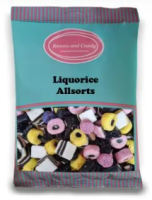
The client loved it. He placed an order on the spot for the mixed-up sweets.
Whether the story is entirely true or not, that accident story became part of confectionery folklore. Bassett's created one of Britain's favourite confections. They even created Bertie Bassett in 1926: a mascot constructed from actual sweets and pipe cleaners.
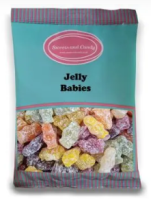
Jelly Babies have an even odder story. An Austrian immigrant created them in 1864 at Fryers of Lancashire. They were meant to be Jelly Bears. But the mould looked more like babies, so they changed the name to "Unclaimed Babies". Yes, really. They were referring to babies abandoned outside churches.
After World War I, they became "Peace Babies". Sugar rationing contributed to their decline during World War II. They finally returned in 1953 as "Jelly Babies". The Beatles made them famous: fans threw them at concerts because George Harrison loved them. In 2024 surveys, Jelly Babies ranked as Britain's most beloved sweet.
The Methodist Who Created Wine Gums (Without Any Wine)
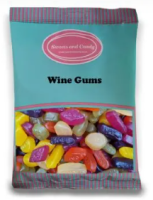
Wine Gums emerged from family drama in 1909. Charles Gordon Maynard wanted to create adult sweets. His father was a strict Methodist teetotaller. Charles had to prove the sweets contained absolutely no wine before his father would let him sell them.
There's never been any wine in Wine Gums. Not a drop. The name was clever marketing: an adult alternative to alcohol. Port, sherry, champagne, burgundy, claret and gin flavours. All are completely alcohol-free.
One Man's Sweet Empire
George Harris deserves a statue made of chocolate. Working at Rowntree's, this one man created:
• Polo mints
• Smarties
• Aero
• KitKat
• Black Magic
• Dairy Box
He revolutionised British chocolate culture. Single-handedly.
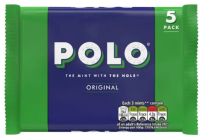
Polo mints were developed in 1939, but World War II delayed them until 1948. Each Polo forms under pressure equivalent to two elephants jumping on it. That's 75 kilonewtons if you're counting. And no, they don't punch out the middle: the mints are made with the hole already there.
The name derives from "Polar" for its superb, fresh quality. In 1995, Polo announced an April Fools' joke that they'd stop making mints with holes "in accordance with EEC Council Regulation". They even created a fake Euro conversion kit. The York plant now produces 22,000 sweets per minute. That's over 32 million single Polos per day.
Aero changed everything when it was patented in 1935. Experts called it the most important development since someone first mixed milk with chocolate. The slogan "Have you felt the bubbles melt?" came from Nick Welch, Florence Welch's father (yes, from Florence and the Machine). During the July 1983 UK heatwave, Aero bars collapsed. The extreme heat made the bubbles fail. British chocolate isn't designed for hot weather.
What's Really Happening in Your Mouth (And Brain)
Every time you eat a sweet, your body performs an incredible molecular dance.
Scientists discovered our sweet taste receptor genes in 2001. Recently, researchers mapped the complete 3D structure. The receptor has two proteins (T1R2 and T1R3) that detect sweetness. When sugar molecules bind to these receptors, here's what happens:
The receptor activates a G-protein called gustducin. This sets off a chain reaction. Calcium releases. Ion channels open. An electrical signal shoots to your brain in milliseconds.
Your brain knows something is sweet almost instantly.
But that's just the beginning.
Why You Can't Stop at One
Sugar doesn't just taste good. It hijacks your brain's reward system. The same pathways that respond to addictive substances.
When sugar hits your tongue, it activates the mesolimbic dopamine pathway. The ventral tegmental area releases dopamine into the nucleus accumbens. You feel pleasure. Happiness. Your brain says: "Remember this. Do it again!"
But there's more. Your gut has a separate system for detecting sugar. The vagus nerve carries these signals to your brain, creating a "wanting" that's different from "liking". You can crave sugar without even tasting sweetness.
Here's the concerning bit. Studies show high-sugar diets change your brain. They alter neurons in your prefrontal cortex: the brain's "brakes". It becomes harder to resist cravings. The hippocampus produces fewer new neurons for making memories. In laboratory studies, rats sometimes choose sugar solutions over morphine or cocaine.
Scientists debate whether sugar is truly addictive. But they've found clear addiction-like behaviours:
• Bingeing patterns
• Withdrawal symptoms
• Cross-sensitisation with addictive drugs
• Altered dopamine and opioid receptor binding
The Temperature Trick
Fructose tastes 1.7 times as sweet as regular sugar. But its sweetness changes with temperature.
Cold drinks taste sweeter because the most sweet-tasting form of fructose is more prevalent at lower temperatures. Heat the same drink and it tastes less sweet. Different molecular forms take over. That's why your tea needs more sugar than your iced coffee.
Artificial sweeteners? Aspartame is 200 times sweeter than sugar. Advantame is up to 20,000 times sweeter than sugar. Yet, research shows that they can make you crave more sweets by resetting your sweet tolerance; zero calories, but not zero consequences.
The Truth About What's in Your Sweets
Ready for this? The shiny coating on your jelly beans comes from beetle secretions.
It's called shellac. Female lac bugs in Indian and Thai forests secrete resin. It takes approximately 100,000 bugs to produce 500g of shellac flakes. The same substance that makes sweets shiny also polishes wood floors. And it used to make phonograph records. Look for E904 on UK labels. It's safe, but yes: you're eating beetle secretions.
Gelatin is derived from boiling animal bones, skin, and connective tissue. Usually from pigs and cattle. Haribo Gold-Bears made in Germany contain pig gelatin. Turkish ones use cow gelatin. Kosher versions use fish gelatin. Some manufacturers now use plant-based alternatives:
• Pectin from fruit
• Carrageenan from seaweed
• Agar-agar from algae
Carmine gives some sweets their red colour. It's made from crushed cochineal beetles. EU law requires it to be labelled clearly.
The Art No Machine Can Master
Making seaside rock with letters through the middle takes up to ten years to master. And machines still can't do it properly today.
The process starts with sugar and glucose syrup, which are boiled to approximately 150°C in copper pans. Then it's divided into three parts: inner core, lettering and outer casing.
The core is sent to a pulling machine. Counter-rotating arms pull and fold it repeatedly. It transforms from golden mass to soft, white candy. Each letter starts approximately the size of a 2p coin. Skilled workers layer thin strips of coloured and white candy.
Square letters, such as B, E, F, K, and L, come first; they retain their shape. Triangle letters, such as A and V, come second. Round letters like C, D, O and Q come last to prevent them from squashing.
The giant assembly starts six feet long and is too thick to hold. A skilled "Sugar Boiler" stretches it into a long rope. As it stretches from six feet to potentially hundreds of feet, the letters shrink from 2p-coin size to tiny. The name remains perfectly readable throughout its length.
Ben Bullock of Burnley began mass-producing Blackpool Rock in 1887. Only 10 rock factories remain in Blackpool today. There used to be over 30. Chinese imports threaten what's left.
Bubble Science
Creating Aero's bubbles requires precision engineering. Manufacturers put melted chocolate under high pressure. They beat gases (carbon dioxide or nitrous oxide) into the tempered liquid. Release the pressure, and bubbles expand; the chocolate foams.
They deposit this foaming chocolate into moulds. As it cools, fat sets and traps the bubbles permanently. The chocolate has roughly half the density of regular bars. It makes an audible crunch when you bite it. The larger surface area creates a more intense flavour.
But no, it doesn't have fewer calories per gram. That's a myth.
How Britain Fell in Love with Sweets
Four out of five Brits eat chocolate once a week or more. Around one-third of us eat it daily. The most popular time? Just after 8 pm. That perfect after-dinner moment.
Why do we buy sweets? The number one reason is to boost our mood. 61% see premium chocolate as an affordable luxury, even when money's tight. Some of us are serious about it: 34% buy sweets weekly, 19% every couple of days and 6% daily.
Cinema Culture
Cinema-goers typically spend several pounds on snacks per visit. Sweet popcorn beats salty: a distinctly British preference. Pick-and-mix became a staple of cinema. Chains offer freshly popped corn in sweet, salted or "mixed" options.
Seaside Traditions
Seaside rock dates back to the 19th century. The lettering innovation arrived in 1887. Famous rock towns include:
• Blackpool
• Brighton
• Scarborough
• Llandudno
Rock is traditionally flavoured with peppermint or spearmint. It's sold as cylindrical sticks 20-25cm long.
Seasonal Sweets
Bonfire Night brings special treats. Bonfire toffee made with butter, sugar and golden syrup. Toffee apples coated in crunchy nuts. Parkin: sticky gingerbread cake from Yorkshire made with treacle and oatmeal.
Sweets mark every celebration. Weddings. Birthdays. Easter. Halloween. Christmas. Valentine's Day. Personalised rock sticks are replacing sugared almonds as wedding favours.
The Numbers Don't Lie
The UK confectionery market tells its own story. Worth £19.76 billion in 2025 and projected to reach £23.39 billion by 2029.
Chocolate confectionery dominates the market, with a 72-73% value share. We spend £289.80 to £334.20 per person annually on confectionery. Cadbury Dairy Milk leads with approximately £680 million in annual sales. That's about 34% of the chocolate market.
For sugar confectionery, Haribo dominates with sales of over £196 million. Rowntree's and Maynards Bassetts follow. Convenience stores capture 40% of confectionery sales. Over 48,590 stores across the UK offer sweets at discounted prices.
A Century of British Tradition
F.W. Woolworths invented the pick-and-mix concept in the USA in 1886. It came to Britain in the summer of 1909.
The first UK Woolworths store opened on Church Street, Liverpool, on 5 November 1909. Originally, sweets were priced at 2 pence per quarter pound. That's approximately 55p per 100g in modern terms. Early selections included:
• Everton Mints from Barker & Dobson
• Butterscotch
• Toffee
• Raspberry ruffles
Customers called it "Pick'n'Mix" almost immediately. But Woolworths didn't officially adopt the name until the 1950s.
The sweets sat in impressive mahogany counters. Glass-fronted counters replaced them in the 1930s. By the late 1930s, Woolworths dominated the UK confectionery market. The 1960s were the peak: manufacturers introduced colourful, exotic flavoured sweets.
When Woolworths went into administration in 2008, it closed over 800 stores. An era ended.
Pick and Mix Today
Wilko became the main successor until its closing in 2023. Half-price sales drew thousands weekly. Today's pick and mix lives on at:
• Supermarkets (Tesco, Asda, Sainsbury's, Morrisons)
• Cinema chains (Cineworld, Vue, Odeon)
• Online retailers (Sugar Rush Sweeties, Letterbox Sweeties)
• Independent sweet shops
The most popular pick and mix sweets at Wilko included:
1. Jellybeans
2. Fizzy bubblegum bottles
3. Cherries
4. Jelly stretch snakes
5. Fried eggs
6. Juicy strawberries
7. Black and raspberry berries
8. Pink and white mice
9. Fizzy cola bottles
Classic favourites endure. Flying Saucers: rice paper filled with sherbet from the 1950s. Cola bottles. Jazzles. Love Hearts. Blue raspberry bonbons. Fizzy dummies. Chocolate raisins. Milk teeth. Teddy bears.
Pick and mix represents freedom. Individuality. The ritual of selecting sweets is just as important as eating them. It sparks joy across generations. And 27% of Brits feel "thrilled" when childhood sweets return to shops.
Modern trends show growing options:
• Vegan and vegetarian varieties
• Sugar-free for diabetics
• Gluten-free ranges
• Premium artisanal offerings
• Online ordering with home delivery
British vs American: Why Our Chocolate Wins
We say "sweets". Americans say "candy". But the differences run deeper.
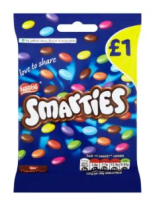
Ask for Smarties in Britain and you'll get chocolate-covered sweets with a crunchy shell, invented in 1882. In America? You'll get chalky fruit-flavoured discs.
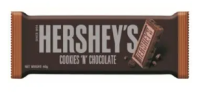
British chocolate must contain a minimum of 20% cocoa solids by mass. America requires just 10%. Cadbury Dairy Milk has 23% cocoa. Hershey's has 11%. You can taste the difference. You can even see it.
The Vomit Problem
Yes, we need to talk about this. American chocolate (mainly Hershey's) contains butyric acid. It gives a tangy, sour aftertaste. Many Brits describe it as tasting like vomit.
This originated from a preservation technique called lipolysis that partially soured milk. Modern methods don't need it. However, manufacturers continue to add it because American consumers expect those notes.
British chocolate uses liquid milk, sugar, and evaporated milk. It leaves a caramelised taste. We add cocoa liquor as it dries, creating a stable "chocolate crumb" powder that we age. Americans use dried milk powder directly. Completely different flavours result.
Built for Different Climates
British chocolate uses fresh, high-fat British butter and cream. Smoother. Creamier. Richer.
American chocolate uses less cocoa butter and more stabilisers. It's designed for hotter climates. It won't melt in Texas heat. British chocolate melts at lower temperatures. It's intended for our cooler climate.
American chocolate contains significantly more sugar. Often, high-fructose corn syrup is used as a substitute for cane sugar. UK chocolate can include up to 5% vegetable oil. In America, you can't include vegetable oil and call it "chocolate" under FDA regulations.
What You Can't Get There
Unique British sweets Americans can't easily find:
• Cadbury Flake (creates the iconic "99" ice cream)
• Crunchie (honeycomb centre)
• Aero (aerated chocolate)
• Wine Gums
• Liquorice Allsorts
• Bounty (coconut filling)
• Tunnock's Tea Cakes
• Jaffa Cakes
• After Eights
American sweets that are less common here:
• Reese's Peanut Butter Cups (the number one selling confectionery in America for nearly 100 years)
• Twizzlers
• Tootsie Rolls
• Jolly Ranchers
• York Peppermint Patties
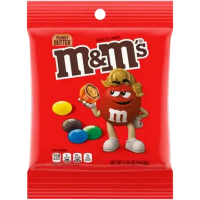
Peanut butter and chocolate are America's signature combination. Not a single day passes without customers asking for Peanut Butter M&Ms in British American candy shops.
The Oxford Street Invasion
Since 2020-2021, American candy stores have exploded across Britain. Over 30 opened on Oxford Street alone. Why?
"Borrowed nostalgia" drives it. We watch American TV shows and films. ET's Reese's Pieces. Stranger Things. Home Alone. We want what we see on screen. TikTok's #JellyFruitChallenge garnered 101 million views. The top 10 YouTube videos of "British people try American candy" accumulated nearly 30 million combined views.
Watch the videos of British People Trying American Candy.
But Westminster City Council investigated approximately 30 stores for alleged business tax avoidance totalling £7.9 million. Raids seized £100,000 worth of counterfeit goods. Products past best-before dates contained unauthorised additives not approved for UK markets.
The Sweet Truth About Us
Our British confectionery story blends innovation with tradition. Victorian entrepreneurs transformed medicine into pleasure. Modern neuroscience reveals why we struggle to resist the allure of sugar. Accidents became institutions. Wartime adaptations became peacetime favourites.
What makes British sweets special at Sweets and Candy? It's not just our superior chocolate or our century-old tradition of pick-and-mix. It's the emotional architecture we've built around confectionery.
When 95% of a nation eats chocolate regularly. When 40% can't imagine life without it, when the number one reason for buying sweets is mood enhancement, when childhood memories are inseparable from quarter-pound paper bags and seaside rock, sweets become more than food. They're threads in the fabric of British life.
This billion-pound market isn't just about sugar and cocoa. It's about dopamine rushes. Chemical pleasure. Nostalgia. And the simple human need for moments of sweetness.
We face challenges. Health consciousness. Sustainability concerns. Changing retail landscapes. But the confectionery industry keeps adapting. Vegan options sit alongside recipes that have remained unchanged for decades. Natural colourings complement traditional methods. Artisanal techniques honour the past.
So go on. Bite into that Crunchie. Feel those Aero bubbles melt. Select your perfect pick-and-mix combination. You're not just eating sweets. You're participating in something quintessentially British.
Ready to explore our sweet selection? Browse our extensive range of traditional British sweets, exciting American treats, and handmade gift hampers perfect for any occasion. With free delivery on orders over £25, there's never been a better time to stock up on your favourites!







Leave A Comment